

Breaking down on the motorway can be one of the most stressful situations a driver can experience. Motorways are fast-moving environments where vehicles are travelling at high speeds, and a sudden breakdown can leave drivers feeling vulnerable and unsure what to do next.
At Adams & Sons Breakdown Recovery, we regularly assist drivers who have experienced unexpected breakdowns on major roads and motorways throughout Hampshire and the surrounding areas. In many cases, the most important thing is knowing how to react quickly and safely.
A vehicle breakdown on a motorway is not only inconvenient, but it can also become dangerous if the correct steps are not taken. Staying calm and following the right procedures can help protect both you and your passengers while you wait for professional help to arrive.
Understanding what to do if your car breaks down on the motorway can make a significant difference in how safely the situation is handled.
Recognising the Signs of a Breakdown
Many motorway breakdowns do not happen completely without warning. Often there are signs that something is wrong with the vehicle before it comes to a complete stop.
Drivers may notice warning lights appearing on the dashboard, a sudden loss of power, unusual noises from the engine, or smoke coming from the bonnet. Sometimes the steering may feel heavier than usual or the engine may begin to misfire.
If you notice any of these warning signs while driving on the motorway, it is important to take them seriously. Ignoring these signals and continuing to drive can make the problem worse and increase the risk of a more serious breakdown.
Whenever possible, begin planning how to leave the motorway safely before the vehicle loses power completely.
Moving to the Hard Shoulder Safely
If your vehicle begins to lose power or shows clear signs of a breakdown, your first priority should be to move the car to the hard shoulder if it is safe to do so.
The hard shoulder is designed specifically for emergencies such as breakdowns, allowing drivers to stop safely away from the main flow of traffic. Signal your intention to move across using your indicators and gradually reduce your speed while steering towards the left-hand side of the motorway.
Try to keep the vehicle moving until you reach the hard shoulder. Stopping in a live lane should always be avoided if possible, as this creates a significant danger for both you and other drivers.
Once on the hard shoulder, position the car as far to the left as possible with the wheels turned slightly towards the verge. This helps provide additional distance between your vehicle and passing traffic.
Switching on Hazard Lights
As soon as the vehicle comes to a stop on the hard shoulder, turn on your hazard lights immediately. Hazard lights alert other drivers that your vehicle has stopped due to an emergency and helps make your car more visible from a distance.
Motorways are busy environments, and traffic often moves quickly. Hazard lights give approaching drivers advance warning so they can move safely into another lane if necessary.
If visibility is poor due to weather or darkness, keeping the hazard lights on becomes even more important.
Leaving the Vehicle Safely
Once the vehicle has stopped safely on the hard shoulder, the next step is to leave the car as quickly and safely as possible.
Passengers should exit the vehicle through the left-hand side doors, away from moving traffic. Everyone should then move behind the safety barrier if one is present. Standing on the verge or behind the barrier helps reduce the risk from passing vehicles.
It is generally safer to move away from the vehicle rather than remain inside it, especially if the car is close to fast-moving traffic.
At Adams & Sons Breakdown Recovery, we often remind drivers that personal safety should always come before concerns about the vehicle itself.
Using an Emergency Telephone
Motorways are equipped with emergency telephones placed at regular intervals along the roadside. These bright orange phones connect directly to motorway control centres and can be used to report a breakdown.
Using these telephones can help emergency services or recovery companies identify your exact location more easily. This is particularly helpful on long stretches of motorway where it may be difficult to describe your position accurately.
If you are able to reach one of these phones safely, it can be a useful way to request assistance and inform authorities about the situation.
Many drivers also use their mobile phones to contact recovery services directly, which is often quicker if you already know who to call.
Contacting Breakdown Recovery
Once everyone is in a safe location away from traffic, the next step is to contact a professional breakdown recovery service.
At Adams & Sons Breakdown Recovery, we regularly receive calls from drivers who have broken down on the motorway and need immediate assistance. Our priority is always to reach stranded drivers quickly and ensure their vehicle is recovered safely.
When calling for help, try to provide as much information as possible about your location. This may include the motorway number, the direction of travel, the nearest junction number or any nearby landmarks.
The more accurate the location details, the faster a recovery vehicle can be dispatched.
Staying Visible While Waiting for Help
While waiting for assistance to arrive, it is important to remain visible to other drivers.
Wearing a high-visibility jacket can make a significant difference, particularly during the evening or in poor weather conditions. Many motorists keep these jackets in their vehicles as part of an emergency kit.
Standing behind the safety barrier rather than beside the car also helps ensure you remain in a protected area while traffic continues to pass.
Although it may be tempting to stay close to the vehicle, maintaining a safe distance is usually the safest option.
Why Cars Break Down on the Motorway
There are many reasons why vehicles break down while travelling on motorways. Some of the most common causes include battery failure, overheating engines, punctured tyres and mechanical faults.
Long motorway journeys can place significant strain on a vehicle, particularly if it has not been serviced regularly. High speeds and continuous driving can expose underlying issues that may not be noticeable during shorter trips.
Overheating engines are another common problem, especially during warm weather or when vehicles are carrying heavy loads. If coolant levels are low or the cooling system is not functioning correctly, the engine temperature can rise rapidly.
At Adams & Sons Breakdown Recovery, we frequently assist drivers whose vehicles have experienced sudden mechanical issues while travelling long distances.
Preventing Motorway Breakdowns
While some breakdowns occur without warning, regular vehicle maintenance can help reduce the risk significantly.
Checking tyre pressure, oil levels and coolant levels before long journeys is always a good habit. Ensuring the battery is in good condition and that the vehicle has been serviced regularly can also prevent many common breakdown issues.
Planning ahead before travelling long distances can help identify small problems before they develop into more serious faults.
Even with careful preparation, however, breakdowns can still happen unexpectedly, which is why knowing how to respond safely is so important.
When Recovery Becomes Necessary
In some cases, roadside repairs may not be possible and the vehicle will need to be transported to a garage for further inspection.
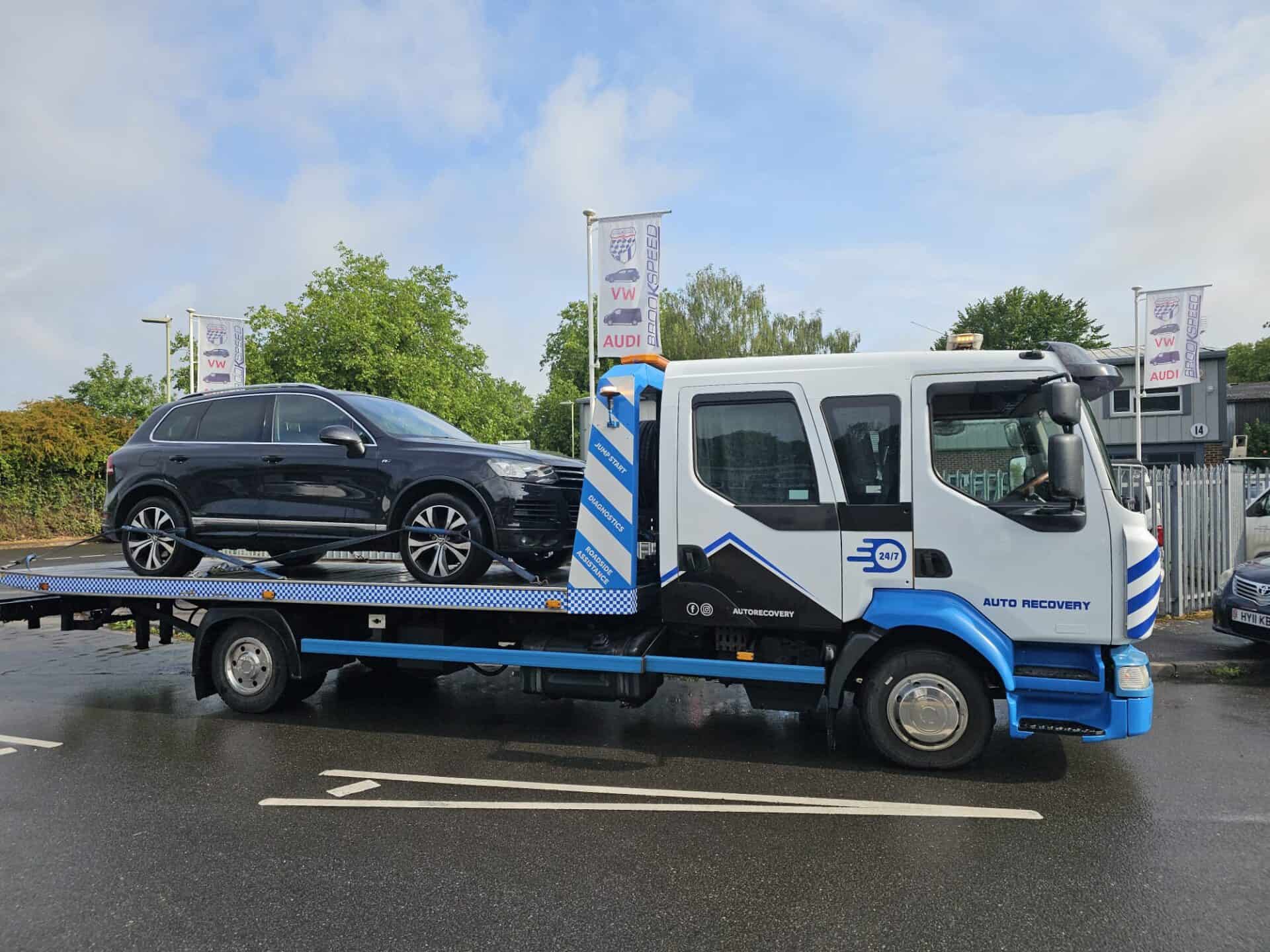
This is where professional recovery services play an essential role. Recovery vehicles are designed to safely transport broken down cars away from busy roads and deliver them to repair centres or the driver’s home.
At Adams & Sons Breakdown Recovery, our team is experienced in handling motorway recoveries quickly and safely. Our goal is always to remove the vehicle from the roadside as efficiently as possible while ensuring the safety of everyone involved.
Once the vehicle has been recovered, drivers can focus on arranging repairs without the added stress of being stranded on the motorway.
Remaining Calm During a Breakdown
A breakdown on the motorway can feel overwhelming, especially if it happens suddenly during a busy journey. However, staying calm and following the correct safety steps can make the situation much easier to manage.
Moving the vehicle to the hard shoulder, activating hazard lights, leaving the car safely and contacting a professional recovery service are the most important actions drivers can take.
At Adams & Sons Breakdown Recovery, we understand how stressful these situations can be. Our team is committed to helping stranded drivers quickly and safely, providing reliable support when it is needed most.
By knowing what to do if your car breaks down on the motorway, drivers can protect themselves and their passengers while ensuring help arrives as soon as possible.